For the numbered suits, colors on the card show suit relationships. They do not permanently assign red to Craks, green to Bams or blue to Dots.
Read relationships, not literal ink
Numbered groups shown in the same color use the same suit; a change in color indicates a different suit, subject to the line’s instructions. For example, two numbered groups in one color can be practiced in Bams, then rebuilt in Dots to see how the relationship stays the same.
Flowers and winds do not become Dots simply because their symbols are printed in blue. Read the card’s full notation and notes instead of applying the numbered-suit rule indiscriminately to every symbol.
Keep product color separate from game meaning
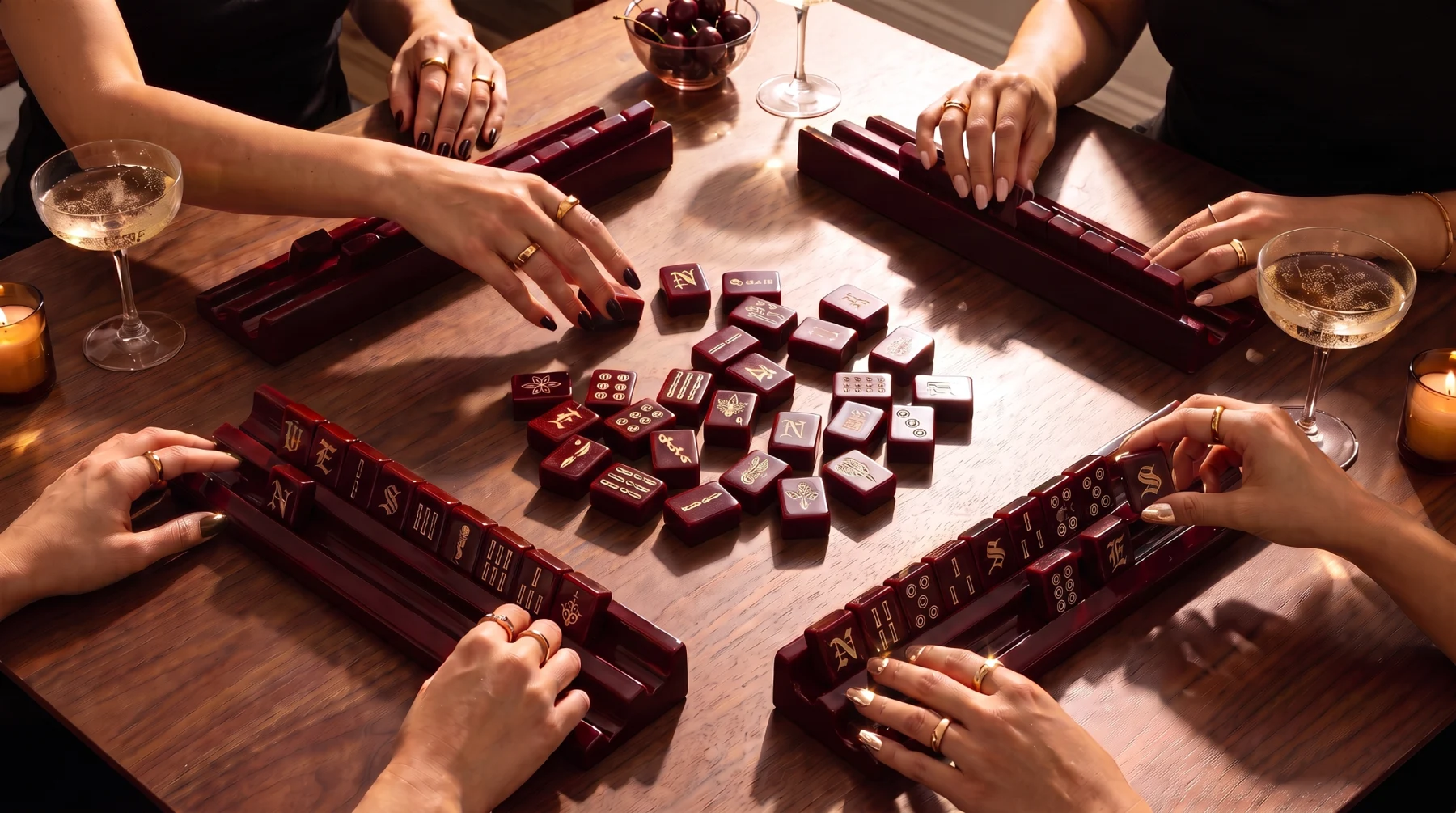
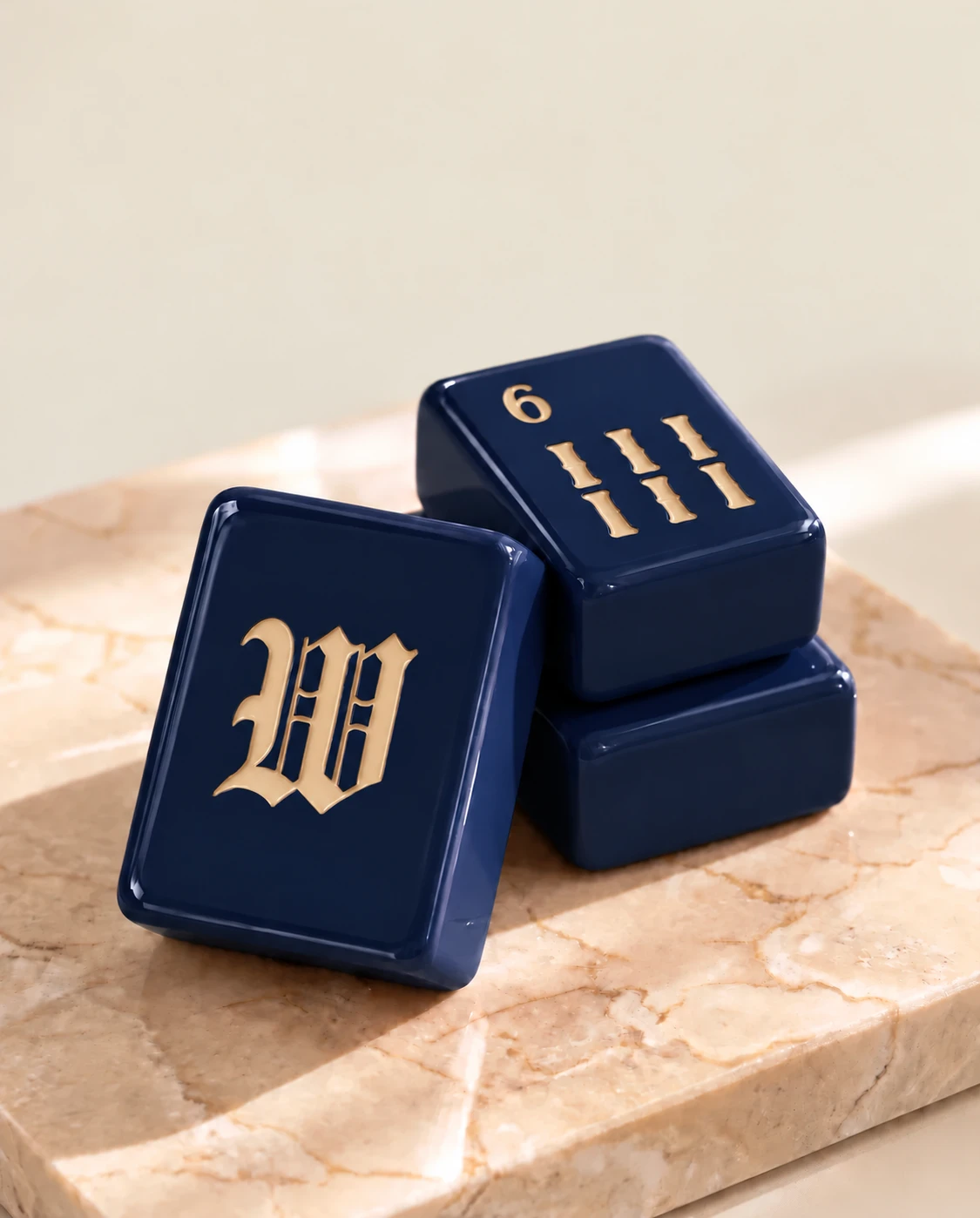
A Cherry Glaze tile body or Champagne-colored lettering is a design choice. It does not change a tile’s suit or give it a new role in a hand. With any decorative set, learn the face symbols before the first game.
For practice, choose one permitted line with your teacher and point to every place where the suit must stay the same or change. If you cannot explain a choice without naming the ink color as a fixed suit, return to the card’s instructions. The distinction becomes easier when you build it physically.