
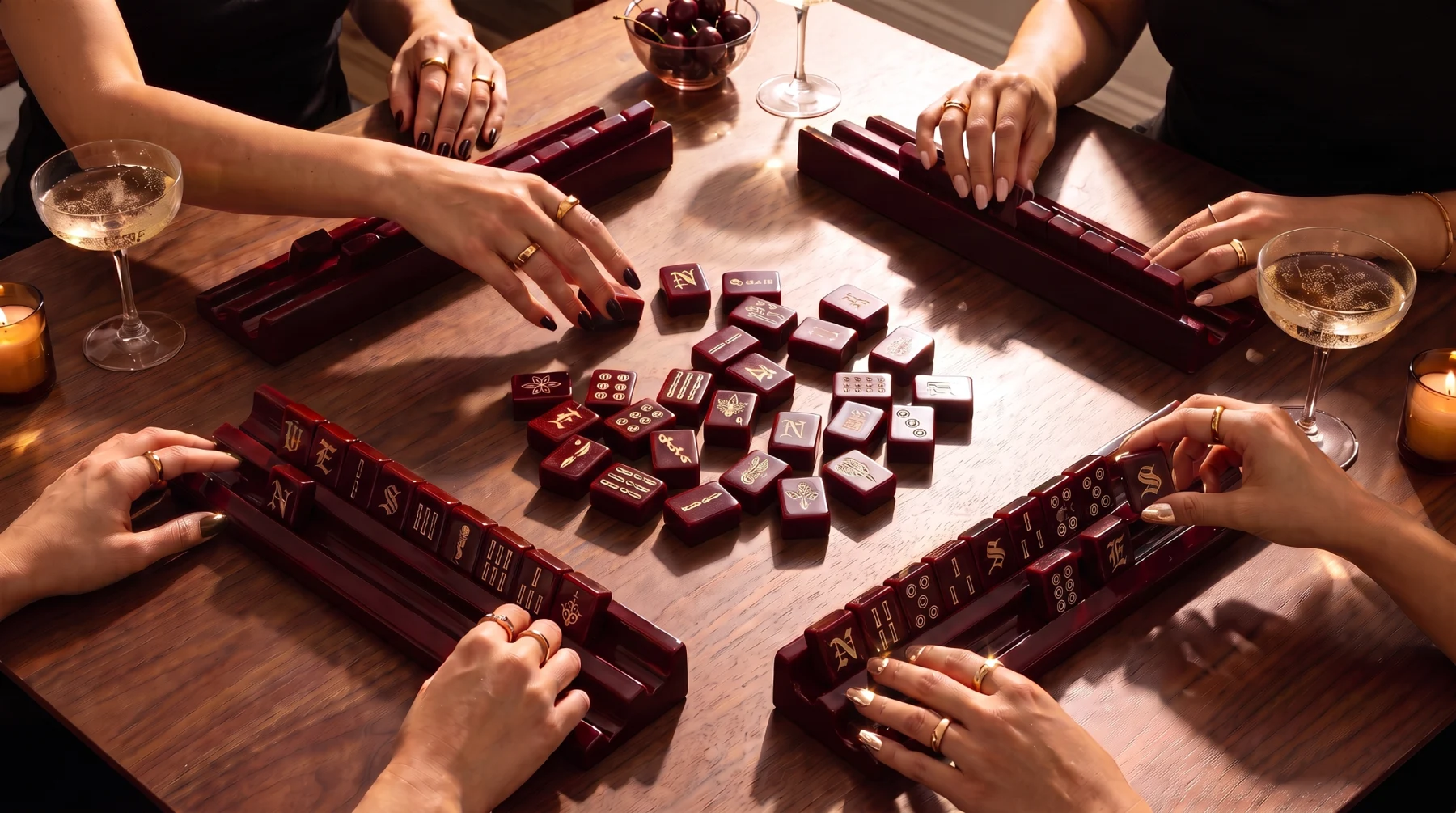
A dead hand is disqualified from winning that game. Errors such as an invalid exposure, a wrong tile count or an incorrect completed declaration can lead to disqualification; the circumstances determine the ruling.
Pause before trying to repair the table
Being several tiles away from your chosen target is not, by itself, a reason to call yourself dead. Do not invent a penalty because a hand feels unpromising. Distinguish a strategy problem from a rules violation.
If a possible error occurs, stop and establish the facts before moving tiles. After an incorrect declaration, what was exposed and what remains intact matter. A confident-sounding summary is not a replacement for the actual rule.
Use the right reference for the situation
In a tournament, call the director rather than negotiating a correction at the table. At home, consult the agreed rulebook and relevant clarification. Keep the tiles as they are while the question is resolved.
A disqualified player stops drawing and discarding. Some previously valid exposed jokers may remain available for exchange, while incorrectly exposed parts are treated differently. This is why “everything is dead now” is too broad. For your first lessons, ask a teacher to demonstrate a specific example rather than trying to memorize every penalty at once.